Why Employability Has Become A Core Component Of University Branding
The conversation around higher education has changed in quiet but significant ways. For a long time, universities were primarily evaluated through familiar markers such as academic excellence, infrastructure, rankings, and legacy. These still matter, but increasingly they are no longer enough on their own. Somewhere along the way, the question students are asking has shifted. It is no longer just about what they will study; it is about what they will become. And that shift has brought employability to the centre of how universities are understood and remembered.
When we reflect on how student expectations have evolved, one pattern feels very clear. Today’s decisions are far more informed and far more outcome-driven. Students and parents are no longer looking at education in isolation; they are looking in direction. They compare placement records, internship opportunities, industry exposure, alumni journeys, and skill development ecosystems before making a choice, not as a formality, but as a necessity. Because education, for them, is not just about learning anymore; it is about transition, from campus to career, from potential to practice.
It is no longer just about communicating academic strength, it is about demonstrating readiness for the real world. It’s about demonstrating, not just telling, how students transition from classrooms to meaningful careers. And that's where employability is more than a metric, it becomes a narrative.
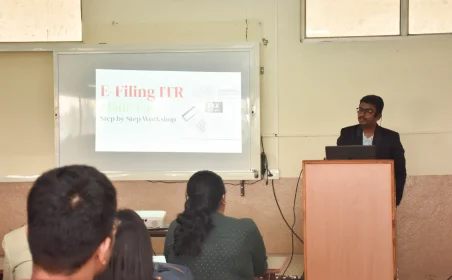
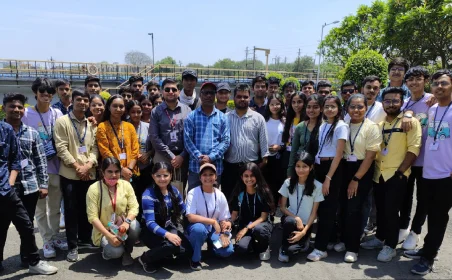
But employability is often reduced to placement alone. In fact it begins much earlier, it runs much deeper. It is formed in classrooms that connect learning to real world problems, in internships where students experience uncertainty and responsibility, in projects that require thinking beyond textbooks, and in certifications, workshops, and experiences that develop confidence along with competence. It’s also defined by something more intangible but equally important. The ability to adapt, to communicate, to collaborate, and to stay steady in unfamiliar environments. These are not developed at the end of a degree; they are built through years of consistent exposure and intention.
Employers today are also looking differently at graduates. Technical knowledge is expected, but no longer sufficient on its own. Today, what is important is not what a student knows, but how a student thinks, their ability to solve problems, work with people, respond to change, and continue learning long after formal education is over. And these qualities are not accidental, they are cultivated by the ecosystem a university builds around learning.
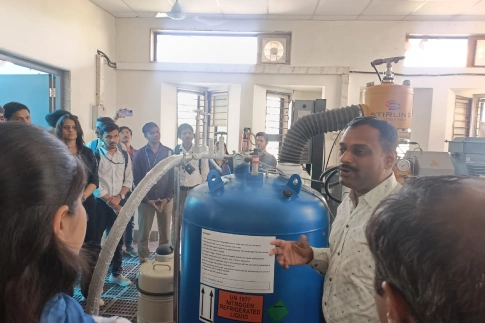
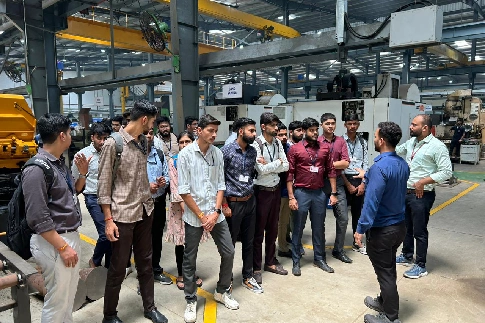
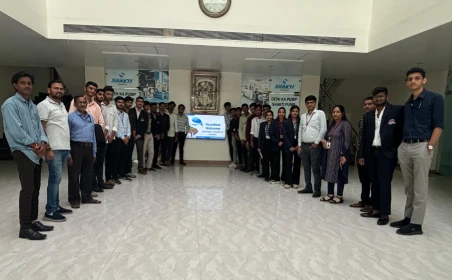
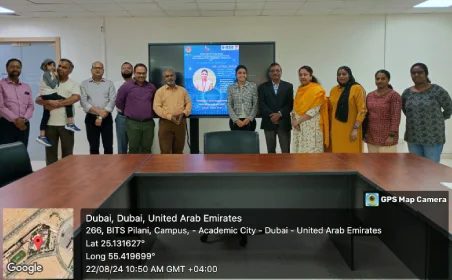
One of the surest indicators of a future-ready institution is its level of industry engagement. When industry is part of the learning journey, education gets more grounded.
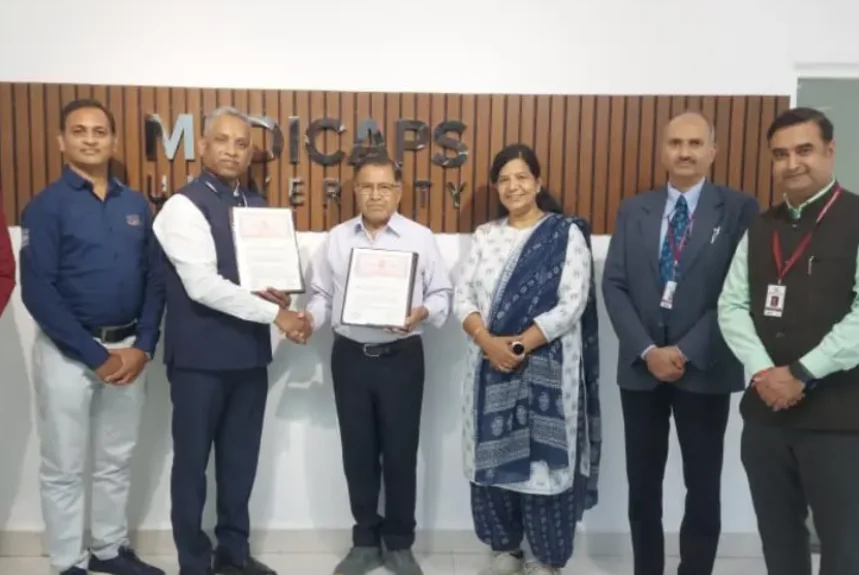
Internships feel less symbolic, projects feel more real, and mentorship becomes more meaningful. At Medicaps University, this approach is reflected in its ongoing collaborations with organizations such as Intel, IBM, Hettich, HCL Tech, L&T, Upgrad and Emversity, which act as bridges between academic learning and professional expectation.
Placements, of course, remain an important milestone. They are visible, measurable, and often the first indicator students and parents look at. But over time, it becomes clear that placements are not the beginning of the story; they are the outcome of everything that comes before them. When recruiters such as Microsoft, Amazon, Cisco, TCS, Capgemini, Tech Mahindra, Deloitte, HSBC, ICICI bank return to a campus year after year, it reflects something deeper than hiring cycles—it reflects trust in the quality of preparation.
And then there are the stories that do not always sit in reports or brochures: the student who finds clarity through an internship, the graduate who builds something of their own, the alum who grows into a role that once felt out of reach. These journeys quietly shape how an institution is perceived, and over time, they become its strongest voice.
As industries continue to evolve under the influence of artificial intelligence, automation, and rapid change, the idea of “career readiness” will keep shifting. Perhaps that is the only certainty we have. In that uncertainty, universities carry a larger responsibility than ever before, not just to teach, but to prepare students for what cannot yet be fully defined.
Ultimately, the strongest university brands are not built in messaging; they are built in outcomes, in lived experiences, and in the quiet confidence of students stepping into the world and finding their place in it. Employability, in that sense, is not just a component of branding, it is its most honest expression. And institutions that understand this will not just stay relevant; they will stay meaningful.

 Back
Back



















 About
About