12th Passed with Physics + Chemistry + Biology (PCB).
Program Overview
The B.Sc. (Hons) in Operation Theatre & Anesthesia Technology is a four-year undergraduate program designed to train students in managing operation theatres and assisting in anesthesia procedures.
Students gain in-depth knowledge of surgical instruments, sterilization techniques, anesthesia equipment, and patient monitoring systems. The program combines theoretical learning with hands-on clinical exposure, preparing students to work efficiently alongside surgeons and anesthesiologists.
Programme Educational Objectives (PEOs)
POs-1
Develop competent professionals capable of handling operation theatre procedures with precision and safety.
POs-2
Demonstrate ethical practices and patient-centered care in surgical environments.
POs-3
Adapt to evolving healthcare technologies and surgical advancements.
POs-4
Engage in continuous learning and professional growth.
Programme Outcomes (POs)
POs-1
Apply medical and technical knowledge in OT settings
POs-2
Assist in anesthesia administration and patient monitoring
POs-3
Maintain sterile environments and infection control
POs-4
Communicate effectively with surgical teams
POs-5
Handle emergency situations with confidence
Programme Specific Outcomes (PSOs)
PSO-1
Expertise in operation theatre management and surgical assistance.
PSO-2
Knowledge of anesthesia equipment and techniques.
PSO-3
Skills in sterilization, infection control, and patient safety.
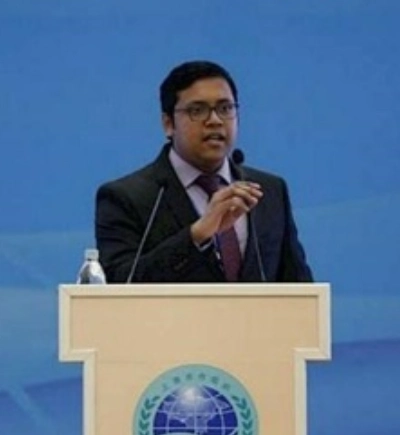
Indian Administrative Officer in Ministry of information broadcasting, New Delhi
Mr. Ankur Lahoty
Proud to see that a sapling (MITM) has grown to a banyan tree (Medicaps University). I am grateful t...
Dinesh Kumar Amresh
In better times, I loved being at Medicaps. I often find myself simultaneously grieving and grateful...
Deepak Pathak
I am happy that I was a student at MITM. we studied & had a lot of fun in our college days..
Amit Makhijani
My four years of engineering at Medicaps University have been outstanding and a memory to treasure f...
Romesh Jadia
There is no elevator to success, you have to take the stairs" but it's important which is the right ...
Alok Vijayvergiya
My alma mater, Medicaps institute of Technology and Management holds a special place in my heart. It...
Ankur Lahoti
Admissions
Admissions
Scholarship
MU-SAT/MLAT
Fee Refund Policy
Faq's
It is a healthcare program that trains students to assist in surgical procedures, manage operation theatres, and support anesthesia administration during surgeries.
Students must have completed 10+2 with Physics, Chemistry, and Biology from a recognized board.
The program is 4 years long, divided into 8 semesters.
You will learn surgical assistance, sterilization techniques, anesthesia support, patient monitoring, and operation theatre management.
Yes, clinical internships in hospitals are a mandatory part of the course.
You can work as an Operation Theatre Technologist, Anesthesia Technician, Surgical Assistant, or ICU Technician.
Yes, with the increasing number of surgeries and hospitals, skilled OT professionals are in high demand.
Yes, students receive practical training in simulation labs and real hospital environments.














 About
About