Why Soft Skills Usually Matter Later Than Students Expect
When students enter university, most of them carry a fairly clear idea of how success is supposed to work. You acquire technical knowledge. You perform well in assessments. You graduate with a degree that signals competence. From there, things should fall into place.
That belief is not unreasonable. It is also incomplete.
What tends to unsettle it is time. Technology changes faster than syllabi. Job roles evolve in ways that are not always visible during the first year of study. Expectations shift quietly. At some point, the question stops being what you know and becomes how you function when certainty disappears.
At Medicaps University, academic rigour remains central to how programmes are designed. Yet, when faculty members reflect on student journeys beyond graduation, a pattern becomes hard to ignore. Strong grades help, but they do not explain everything. Students who adjust well tend to do something else consistently. They communicate with less friction. They manage pressure without becoming rigid. They work with people rather than around them.
These are often grouped under the label of soft skills. The label is misleading. There is nothing soft about the role they play.
Why Technical Strength Feels Safer Than It Really Is
Technical skills offer clarity. They can be tested, scored, and compared. For students, this creates a sense of control. If you put in the effort, results follow. The feedback loop is visible.
Human skills do not follow that pattern. They develop unevenly and reveal themselves in situations that are rarely comfortable. Group work that goes off track. Feedback that lands badly. A disagreement that cannot be resolved quickly. These moments expose how a person listens, reacts, and adjusts.
In conversations with recruiters, a similar frustration often surfaces. Candidates arrive technically prepared, sometimes impressively so, yet struggle when collaboration or communication becomes central. In those situations, technical knowledge does not vanish. It simply becomes harder to apply. Over time, that difficulty shapes responsibility, growth, and trust more than exam scores do.
Emotional intelligence is part of this, though it is often misunderstood. It is not about being agreeable or confident. It is about reading situations accurately, handling stress without escalation, and responding to people rather than reacting to them. In real workplaces, that distinction matters.
Learning That Does Not Announce Itself as Learning
Some of the most important learning on campus happens quietly, and often without anyone realising it at the time.
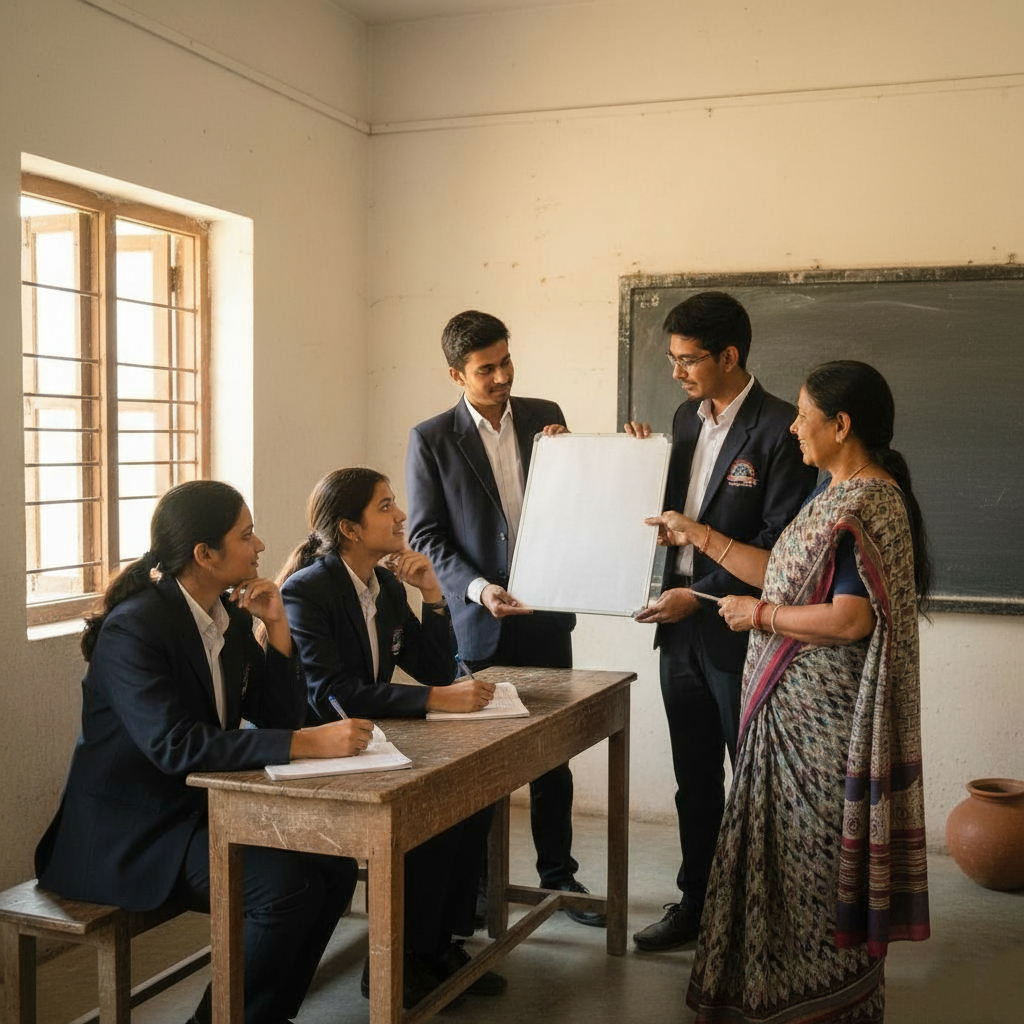
A project developed within the Medicaps innovation and incubation ecosystem offers a useful example. A student team worked on an educational solution intended for rural schools. From a technical standpoint, it functioned. Early presentations suggested it was ready.
It was not.
The project stalled, not because of design flaws, but because it did not fit the context it was meant to serve. Only after the team spent time speaking with teachers and community members did this become clear. Several assumptions were wrong. Language had been too complex. Certain features were unnecessary.
The project slowed down. That felt uncomfortable. It also made the difference. The revised version eventually found support from an NGO willing to pilot it. The technical work enabled the idea. The human work made it usable.
How These Capabilities Actually Take Shape
Soft skills rarely develop because students are told they are important. They develop because students are placed in situations where avoiding them is not possible.
This happens when someone has to explain an idea to a peer who does not agree. When feedback cannot be ignored. When responsibility is shared unevenly. When a mistake is visible and cannot be reframed as a misunderstanding.
Mentorship matters here, particularly when it moves beyond performance metrics. Conversations about how students handle disagreement, accountability, or failure often leave a deeper impression than advice about marks or placements. These discussions are rarely tidy. They are often uncomfortable. That is why they work.
What the University Environment Quietly Teaches
Universities shape human skills less through statements and more through structure.
Innovation initiatives place students in situations where problems do not come with clear answers. Progress depends on negotiation and patience. Student-led clubs and societies introduce leadership experiences that include conflict and compromise, not just titles. These settings require students to practise judgment repeatedly, often without immediate feedback.
These experiences are not decorative. They influence how students apply knowledge when outcomes are uncertain. Teaching approaches that encourage curiosity and problem-solving reinforce this learning. The result is not polished. It is a form of preparedness that only becomes visible later.
After Graduation, These Differences Become Obvious
A degree often opens the first door. What follows depends on whether people trust you, want to work with you, and feel comfortable relying on your decisions.
In job markets across Indore, Madhya Pradesh, and elsewhere, employers increasingly notice how graduates adapt, communicate, and take responsibility.These qualities determine who is given room to grow. Technical competence attracts attention early. Human capability determines whether that attention lasts.
A More Honest Way to Think About Careers
Learning that remains useful beyond changing technologies is not an abstract ideal. It is a practical necessity.
Students who graduate with strong technical foundations and the ability to work thoughtfully with others are better equipped for uncertainty. Their careers tend to remain flexible. Their learning continues beyond formal education.
That outcome is rarely accidental. It emerges when education treats human skills not as add-ons, but as part of how students learn to function in real situations.
- Yash Gupta, Business Development Manager, Guiding students at Medicaps University
 Back
Back


 About
About