If you're thinking about an MTech in Civil Engineering, the first question is obvious: what will it actually pay?
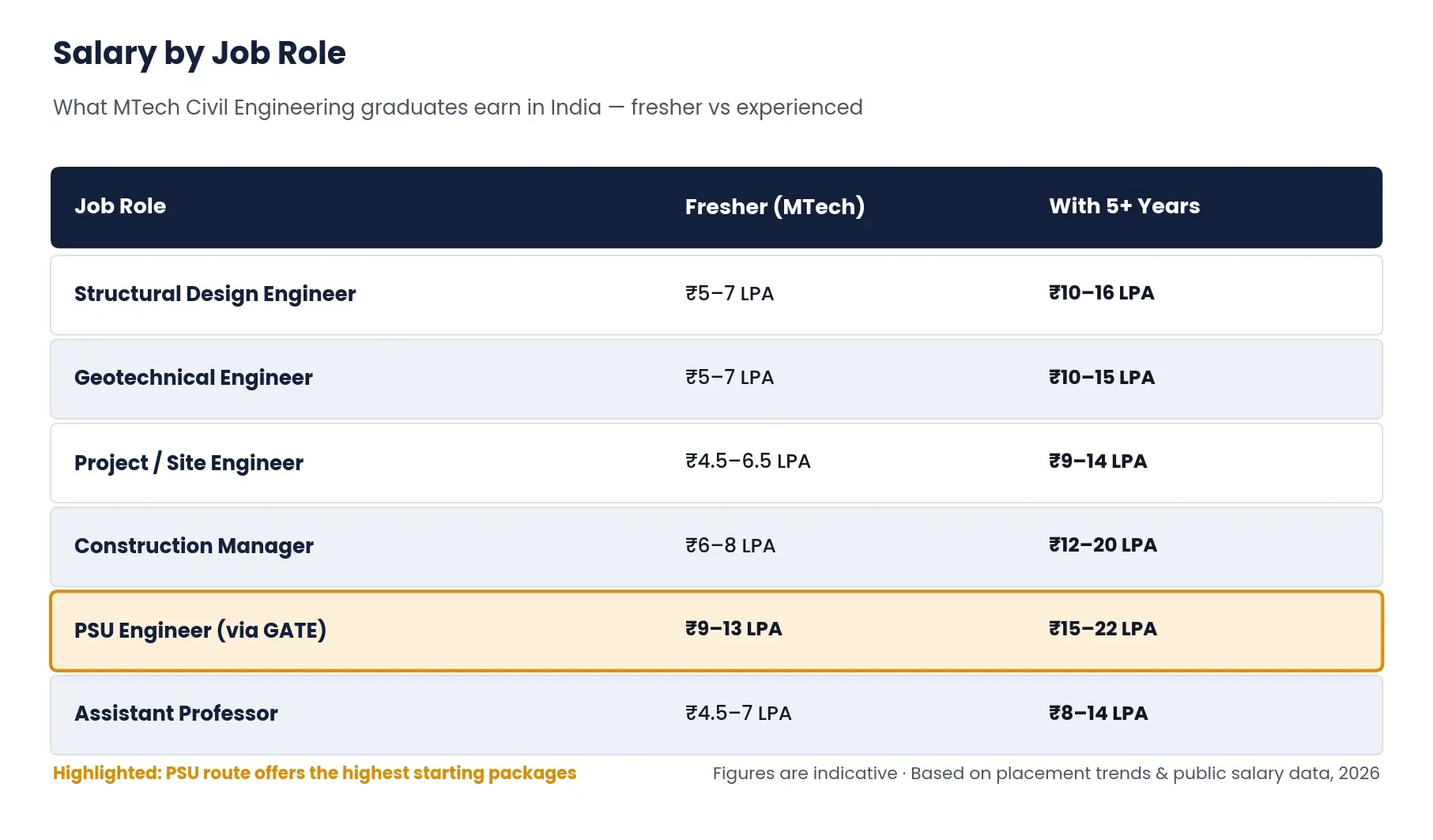
Here's the straight answer, with real numbers, so you can decide whether those two extra years are worth it. A fresh Civil Engineering graduate in India typically earns ₹5-8 LPA. With 4-5 years of experience and a strong specialisation, ₹12-18 LPA is achievable. Senior engineers and project managers in metros regularly cross ₹20 LPA.
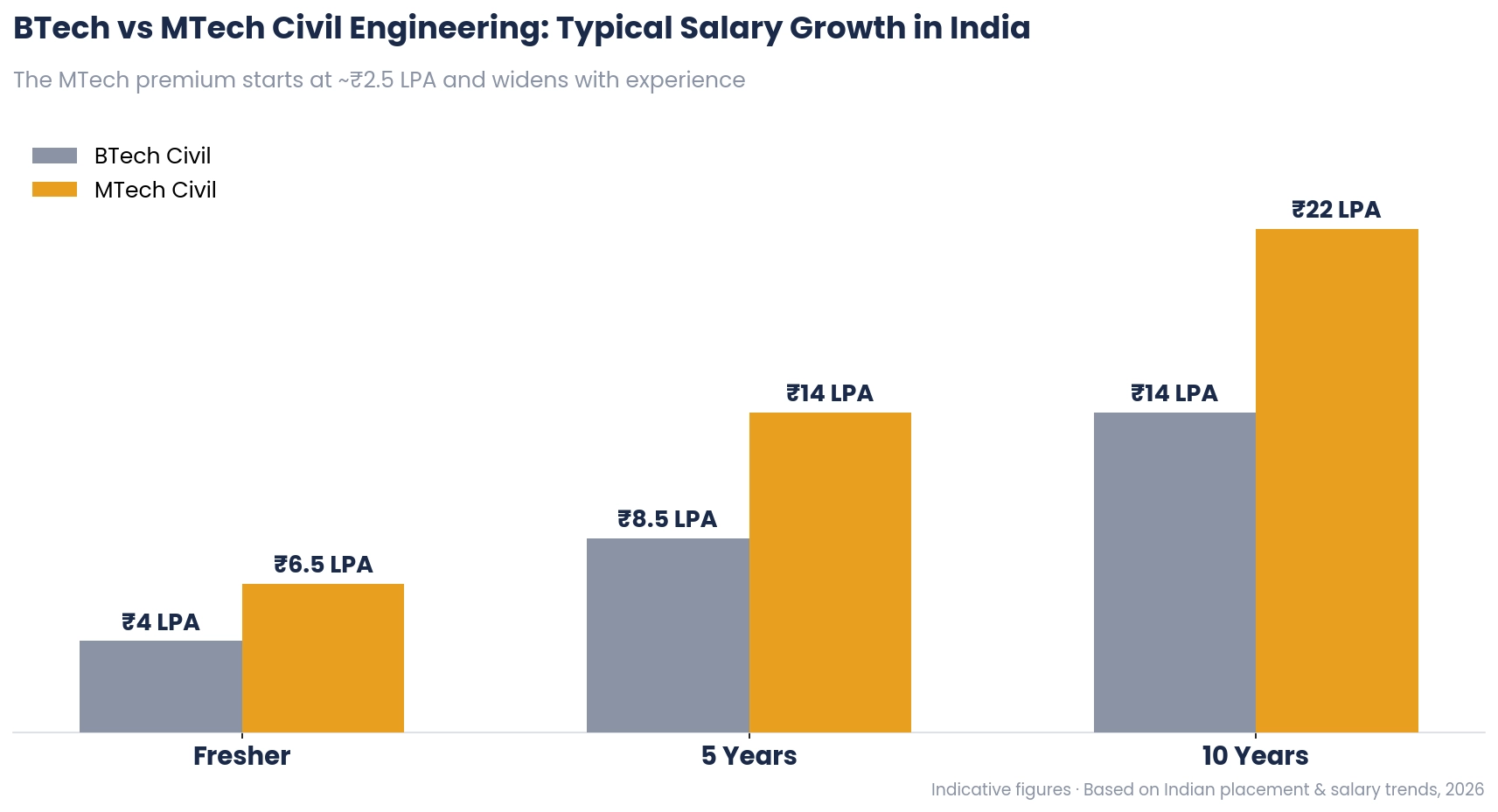
Compare that with a B.Tech. Civil fresher, who usually starts at ₹3-4.5 LPA. So the M.Tech. premium at entry level is roughly ₹1.5-3 LPA and the gap widens over time, because specialised roles like structural design and geotechnical engineering are mostly reserved for postgraduate.
Notice the PSU row. If you keep your GATE score alive during M.Tech., government organisations like NTPC, NHPC, and ONGC offer some of the best starting packages in the field, often higher than private offers.
Is Demand for Civil Engineers Actually Growing?
This is one of the most underestimated parts of the decision. The Union Budget 2026-27 set aside a record ₹12.2 lakh crore for infrastructure highways, metros, ports, and seven new high-speed rail corridors (Business Standard).
According to IBEF, India's infrastructure investment has grown from ₹1.7 lakh crore in FY16 to over ₹11 lakh crore today. Every metro line, expressway, and smart city project needs qualified engineers and M.Tech. holders sit at the top of the technical hiring ladder.
What Actually Increases Your Salary After M.Tech.?
The degree opens the door. These five things decide the package:
One industry software, learned deeply — STAAD Pro, ETABS, or Revit/BIM. BIM skills alone can add 20–30% to a package right now.
A valid GATE score — it's your ticket to PSU salaries even after joining M.Tech.
A live project over a conventional thesis—recruiters care more about what you've built than what you've written.
The right sector — metro rail, green buildings, and smart city projects are currently paying above market.
Willingness to relocate early — the first 3–4 years on big projects set up everything that follows.
The ROI Question: Does M.Tech. Pay for Itself?
This is where your choice of college matters more than the degree itself.
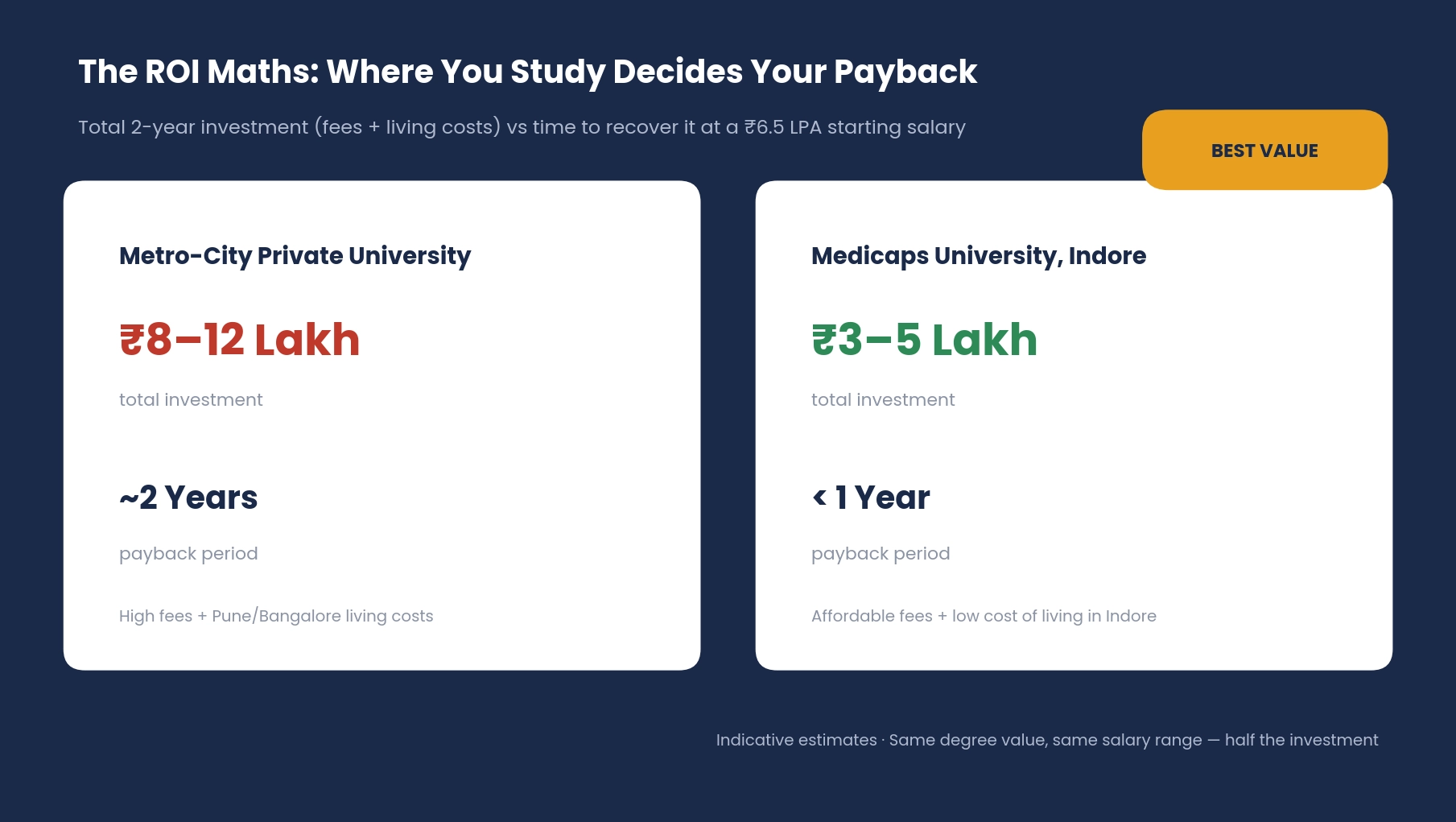
An M.Tech. at a metro-city private university can cost ₹4-8 lakh in fees, plus ₹3-4 lakh in living expenses over two years. If you start at ₹6 LPA, you're looking at 2+ years just to recover the investment.
Now run the same maths at Medicaps University, Indore. The MTech in Civil Engineering programme offers NAAC-accredited education, modern structural and geotech labs, and active placement support at a fraction of metro-city costs. Indore's cost of living is among the lowest of any major Indian city, so your total two-year investment can be less than half of what you'd spend in Pune or Bangalore.
Same degree value. Same starting salary range. Half the investment. That's a payback period of under a year for most graduates which is what ROI on education should look like.
Conclusion
An MTech in Civil Engineering is one of the few postgraduate degrees in India where the salary maths genuinely works. You start at ₹5-8 LPA, grow into ₹12-18 LPA within five years, and the country's record infrastructure spending means demand isn't slowing down anytime soon.
But the real decision isn't whether to do an M.Tech. it's where. Pick a college where the fees and living costs don't eat up your first two years of salary. Pair the degree with GATE, one industry software, and a live project, and you'll recover your investment faster than most of your batchmates.
If you want a programme that delivers metro-level education at Indore-level costs, take a look at the MTech in Civil Engineering at Medicaps University; the ROI speaks for itself.

 Back
Back


 About
About