M.Tech. in Civil Engineering colleges without GATE
GATE has been treated like the only gateway into an MTech program for so long that most civil engineering graduates don't even explore what's beyond it. The reality? Dozens of recognised universities across India admit students into MTech programs without a GATE score through direct admission, university entrance tests, or work-based criteria.
In this blog we've covered everything from eligibility and top colleges to career scope and salary, so you can make a decision with full clarity.
What is MTech in Civil Engineering?
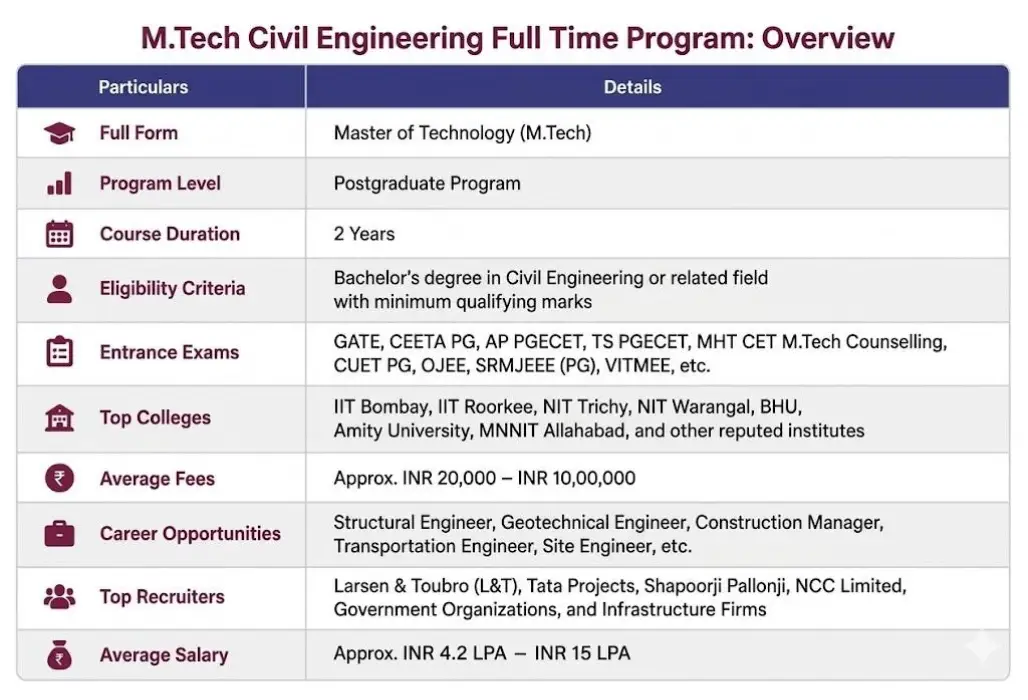
It is a 2-year postgraduate program that takes your B.Tech foundation and builds serious depth on top of it.
Here's what it actually covers:
Advanced structural design — designing buildings, bridges, and large-scale infrastructure from a technical standpoint.
Construction management — budgets, timelines, contracts, and project execution.
Geotechnical engineering — understanding soil and rock behaviour for safe foundation design.
Transportation networks — roads, airports, highways, etc.
Environmental engineering — sustainability, pollution control, and green infrastructure.
Smart city planning — integrating digital systems into modern urban development.
The program is available in two formats:
Full-time — 2 years on campus, ideal for fresh graduates.
WILP / Hybrid — theory online, practicals on campus, designed for working professionals who can't afford to leave their jobs.
Eligibility for M.Tech in Civil Engineering:
Candidates must have a Bachelor's degree (B.E./B.Tech) in Civil Engineering or a related discipline from a recognized university.
Minimum 50–55% aggregate marks (varies by university).
GATE score required for IITs and NITs only.
Work experience required for WILP programs at some universities.
Polytechnic diploma holders are eligible for select hybrid-mode programs.
Why Should Anyone Study M.tech in Civil Engineering?
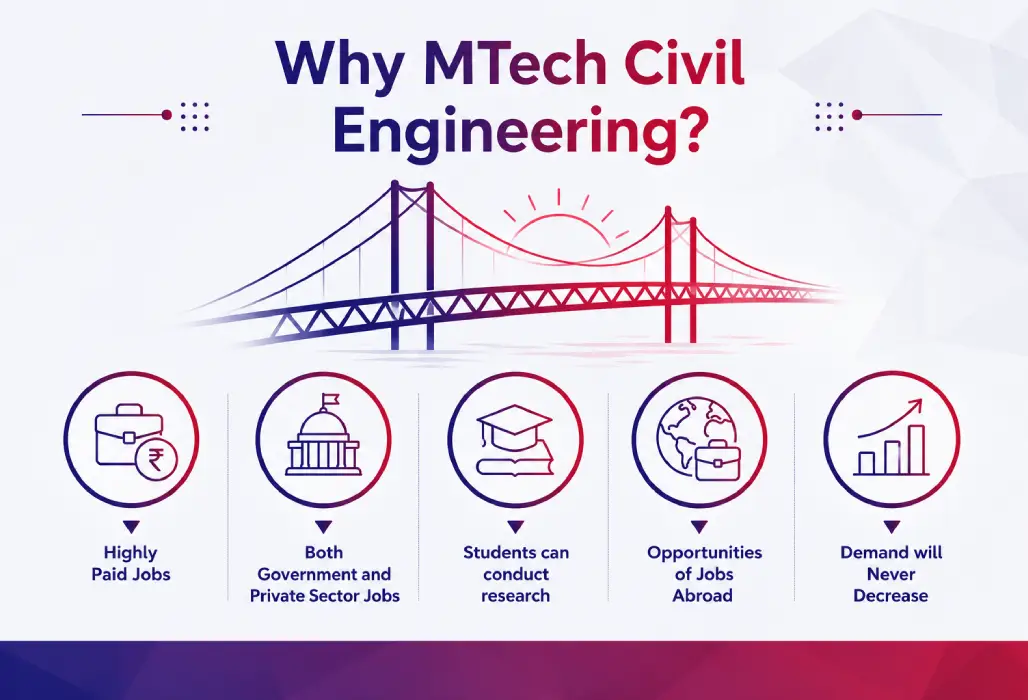
Fair question. Here's the honest answer: A B.Tech gets you hired. An MTech gets you promoted or lets you switch to roles that a B.Tech alone wouldn't unlock. Specifically:
You develop expertise in niche areas like structural dynamics, geotechnical design, or smart infrastructure—skills that are genuinely rare and highly valued.
Your salary trajectory changes significantly. M.Tech holders typically earn more at every career stage compared to their B.Tech counterparts.
Senior roles in construction, project management, and design almost always prefer postgraduates.
If entrepreneurship is your goal—such as starting your own consultancy or contracting business—the advanced knowledge gained through this program gives you a real competitive edge.
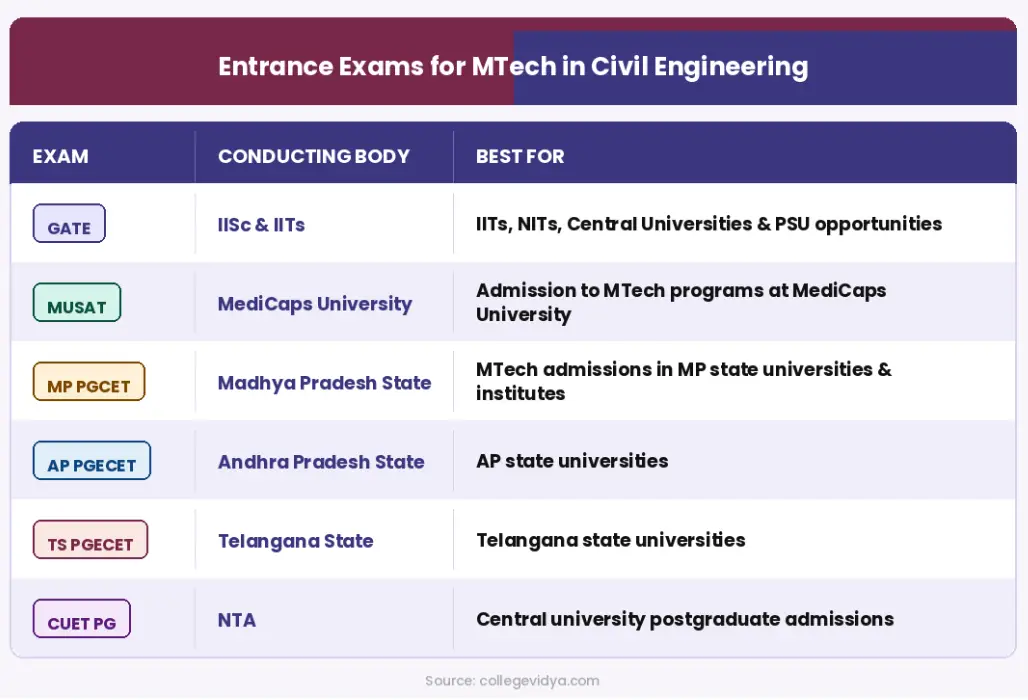
Entrance Exams for M.tech in Civil Engineering Admission With GATE
Best Specialisations in Civil Engineering
Structural Engineering — Design buildings, bridges, and large-scale infrastructure. One of the most in-demand specializations today.
Construction Management — Oversee teams, budgets, and projects. An ideal choice for those aiming for leadership roles or entrepreneurship.
Transportation Engineering — Focus on roads, metros, airports, and other transport infrastructure. Strong demand as India continues to invest in major infrastructure projects.
Environmental Engineering — Work on sustainable construction, water treatment, and pollution control. A rapidly growing field driven by ESG and green building initiatives.
Water Resources Engineering — Specialize in dams, irrigation systems, and flood management. A niche but highly relevant field for India's evolving water infrastructure needs.
Quick take: Structural Engineering and Construction Management have the highest volume of open roles right now. Environmental Engin*eering is the fastest-growing thanks to ESG mandates and green building regulations.
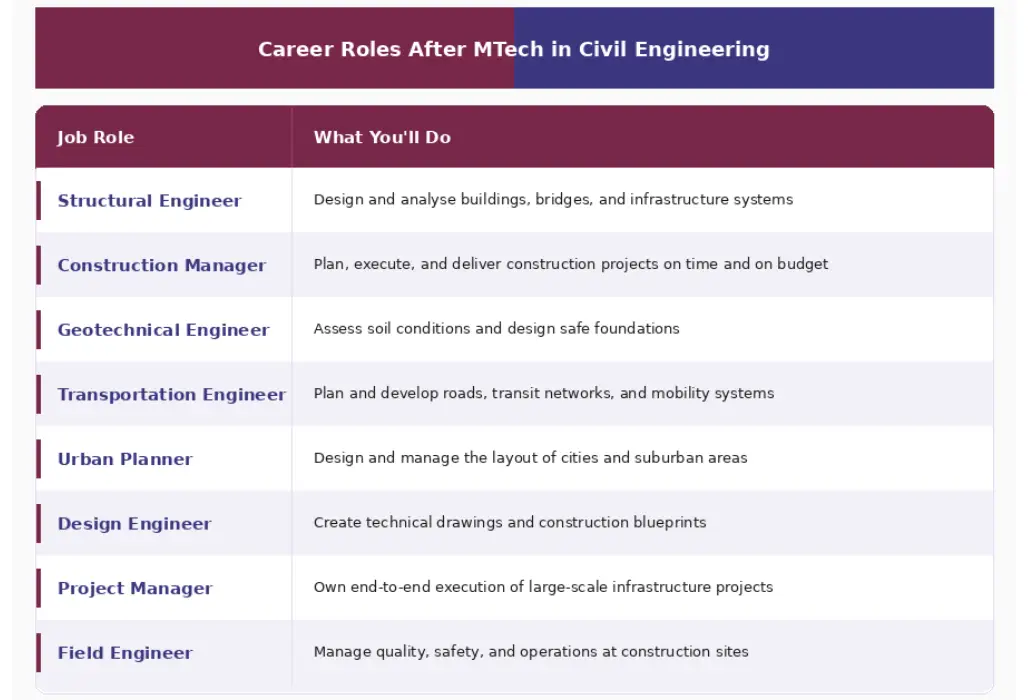
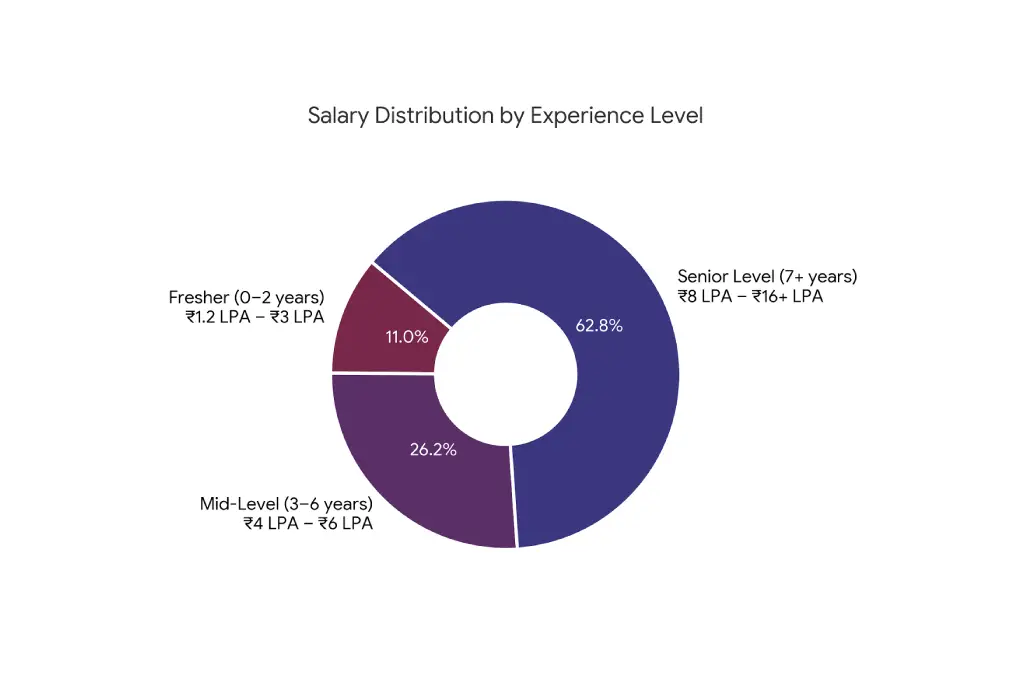
Career Roles and Salary After M.tech
What's New in the Field? Trends & Tools You'll Learn
Civil engineering in 2026 looks very different from what it did a decade ago. The MTech curriculum now includes exposure to:
BIM (Building Information Modeling) — The industry standard for planning and executing construction projects digitally before a single brick is laid.
GIS (Geographic Information System) — Used for land analysis, urban planning, and infrastructure mapping.
Green Building Design — Focuses on sustainable materials, energy-efficient structures, and net-zero construction. It is no longer a trend but an industry requirement.
Smart City Planning — Integrates digital systems into urban infrastructure for efficient resource management.
Construction Management Software — Learn industry-leading tools such as Primavera and MS Project for planning, scheduling, and tracking large-scale construction projects.
If you're not familiar with most of these, that's exactly the point of the program.
Wrapping Up
GATE is a great route but it's not the only one. If you're serious about advancing your civil engineering career, an Mtech in Civil Engineering opens doors that a B.Tech simply can't. More specialised roles, higher salaries, leadership positions, and the option to move into research or entrepreneurship all becomes accessible.
And if GATE didn't go your way? That's fine. Between private universities, state-level entrance exams, direct admission routes, and WILP programs for working professionals there are plenty of legitimate, well-recognised paths to get this degree
The question WAS NEVER ABOUT GATE But has been always take the next step
 Back
Back


 About
About