10 Most Demanding Engineering Courses in Future (With Salary & Scope)
By 2035, some engineering fields may fade into irrelevance, while others will generate millions of high-paying jobs worldwide. For students and professionals, this means one thing: choosing the right engineering branch today is the key to securing a future-proof and well-paying career tomorrow. Engineering is now the driving force behind AI, cybersecurity, clean energy, and digital transformation.
This blog will guide you through the 10 most demanding engineering courses of the future, with real salary data, scope, and career opportunities.
Read More: Why are candidates interested in pursuing an MBA in Business Analytics
10 Most Demanding Engineering Courses in the Future
AI/ML engineering focuses on building smart systems that can learn, adapt, and make decisions. India alone is expected to need 1 million AI professionals by 2026. With salaries among the highest in tech and demand across sectors, AI/ML is one of the most future-proof careers.
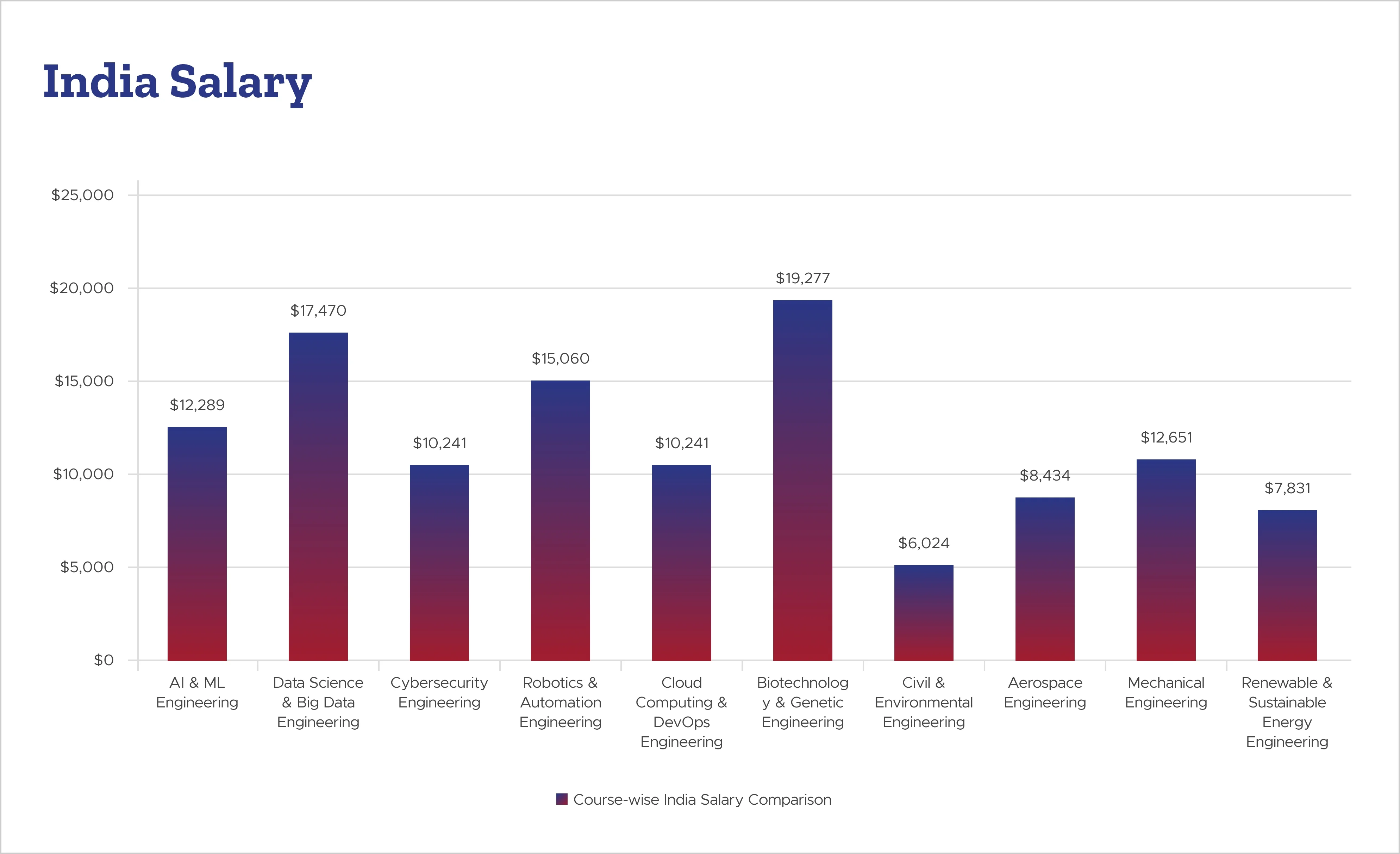
Average Salary (India): ₹10.2 LPA; range ₹4–₹35 LPA (AmbitionBox)
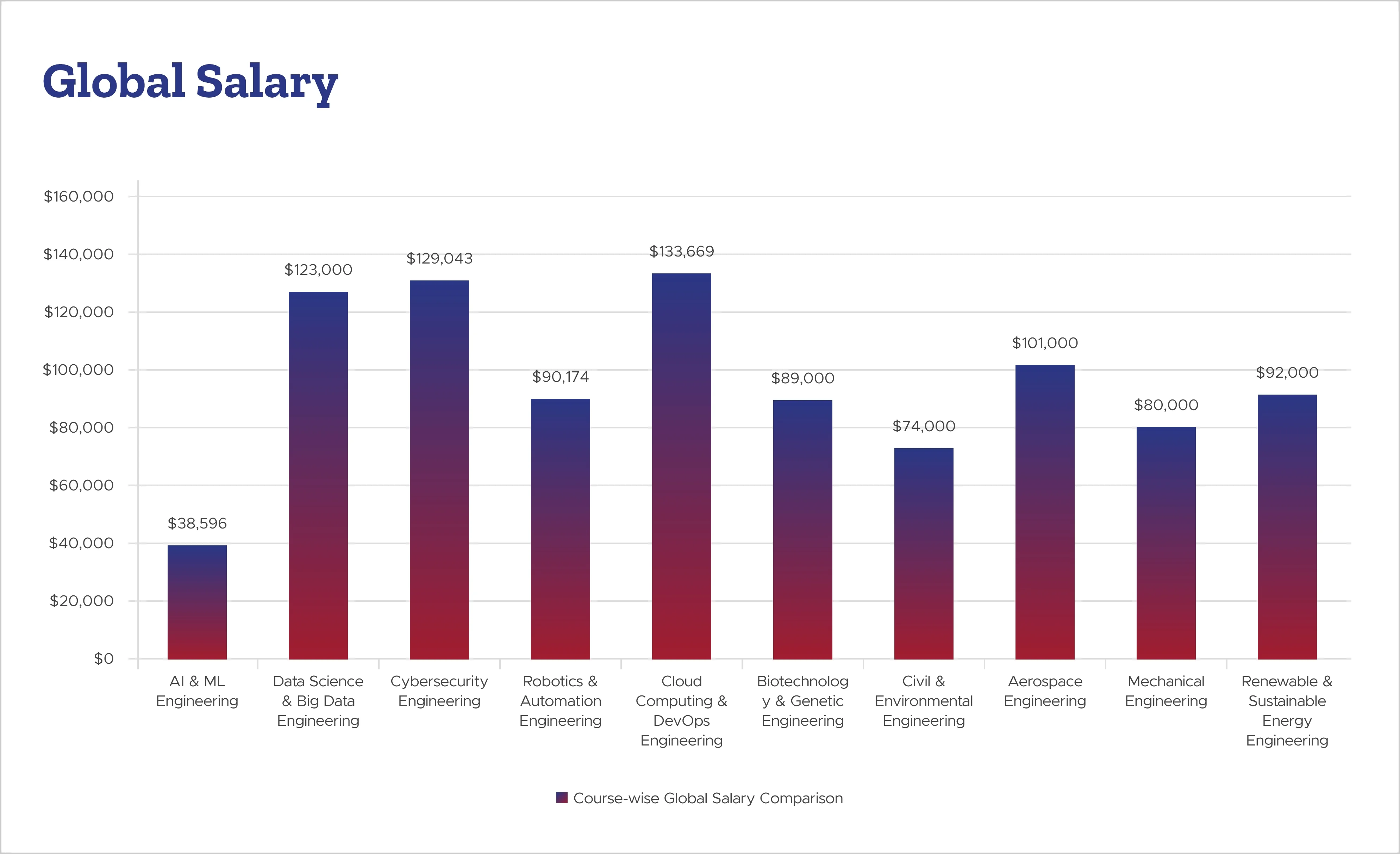
Global Average Salary: ₹34 lakhs up to over ₹1 crore annually (Envision)
Career Options: AI Engineer, ML Specialist, Data Scientist, Deep Learning Researcher
Why Future-Proof: AI is expected to add $15 trillion to the global economy by 2030 (PwC).
2. Data Science & Big Data Engineering
Data Science is the backbone of the digital economy. Engineers analyze, process, and interpret massive data sets to deliver insights that drive decisions. This makes it one of the fastest-growing and highest-paying engineering careers worldwide.
Global Average Salary: $123,000 annually (Glassdoor US)
Career Options: Data Scientist, Data Analyst, Big Data Engineer, BI Consultant
Why Future-Proof: Every sector—healthcare, retail, finance—runs on data insights.
3. Cybersecurity Engineering
Cybersecurity engineers protect networks, systems, and organizations from hackers and data breaches. With cyberattacks increasing 3x in the last decade, this specialization is indispensable.
Robotics engineers design, build, and maintain systems that reduce human effort and boost efficiency. Industry 4.0 is expanding globally, making this one of the most exciting careers.
Global Average Salary: $90,174 annually (US Bureau)
Career Options: Robotics Engineer, Automation Specialist, Mechatronics Engineer, Drone Engineer
Why Future-Proof: Robots are expanding in healthcare, logistics, defense, and consumer tech.
5. Cloud Computing & DevOps Engineering
Cloud engineers and DevOps specialists manage cloud infrastructure and design scalable systems. With 90% of businesses moving to the cloud by 2030, these skills are indispensable.
Career Options: Solar Engineer, Wind Energy Specialist, Energy Consultant
Why Future-Proof: Renewable energy jobs already crossed 12.7 million globally.
Conclusion
The landscape of engineering is shifting—what was cutting-edge in the past is rapidly being replaced by new frontiers of innovation. By 2035, only those specializations aligned with AI, sustainability, clean energy, robotics, cybersecurity, and data-focused technologies will hold the highest demand and reward. Traditional branches won’t vanish, but their real strength will come from embracing interdisciplinary skills, emerging tools, and global trends.
For students, this means that choosing the right engineering path today is about more than just earning a degree—it’s about preparing for a world that values adaptability, curiosity, and forward-thinking problem-solving. Institutions that continuously update their curriculum and align learning with industry needs are shaping graduates who are not just employable, but future ready.
At Medicaps, B.Tech programs are designed with this vision—integrating core engineering with emerging technologies, research opportunities, and industry exposure. For aspiring engineers, it’s not just about following trends, but learning in an environment where innovation is encouraged and tomorrow’s challenges are anticipated today.
 Back
Back


 About
About